Featured Breathable & High-Oxygen Contact Lens Catalog
Explore our core high-transmissibility silicone hydrogel soft lenses, custom color series, and medical-grade care accessories available for international OEM, ODM, and bulk distribution.
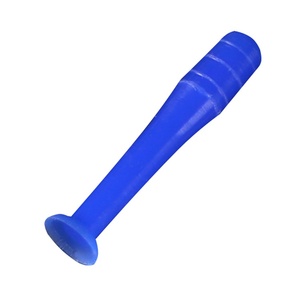
Contact Lens Suction Stick Silicone Orthokeratology Lens Small Model 01 White One-piece Beauty Eye Care Box
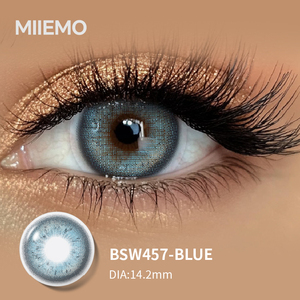
Best Selling Yearly Color Contact Lens Soft Colored Eye Contact Lenses Silicon Contact Lens
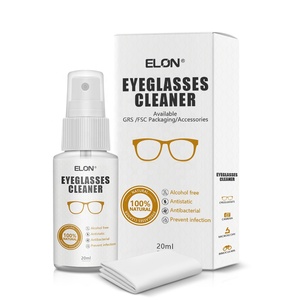
All-in-one Cleaning Kit Lens Care Travel Kit with Pump and Microfiber Cloth All Natural Cleaner
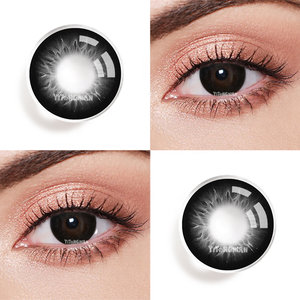
YITONGNIAN 14.5mm Soft HEMA Eye Lenses Black Color Contact Lenses Wholesale Natural Korean Style
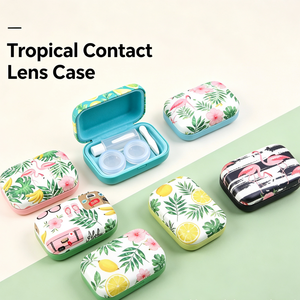
Cute Flamingo Printed Hard Shell Portable All-in-One Contact Lens Case Kit for Eyecare
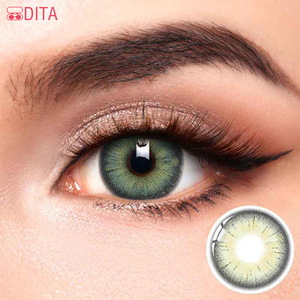
High-oxygen Breathable Silicone Hydrogel Transparent Prescription Contact Lenses Disposable Soft Contact Lenses
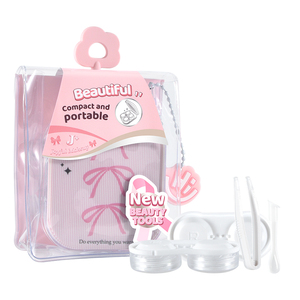
High Quality Portable Cosmetic Contact Lens Case Set with Tweezers Lovely Travel Kit Box
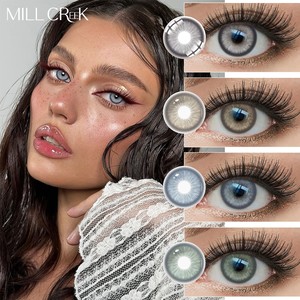
MILL CREEK Hazel 14.2mm Yearly Cosmetic HEMA Colored Contact Lenses Wholesale OEM Custom Enhancement
Executive Summary: The Evolution of China’s Contact Lens Manufacturing Sector
The global contact lens market is experiencing a profound paradigm shift driven by consumer demand for superior ocular health, prolonged wearing comfort, and versatile cosmetic enhancements. Historically dominated by traditional 2-hydroxyethyl methacrylate (HEMA) hydrogel materials, the market has rapidly transitioned toward Silicone Hydrogel (SiHy) matrices. These advanced polymers solve the fundamental physiological limitation of hydrogel lenses: oxygen permeability dependency on water content.
China has emerged as a powerhouse in medical-grade optical manufacturing, establishing state-of-the-art production hubs in provinces such as Jiangsu, Zhejiang, and Guangdong. By integrating automated high-precision cast molding, robotic lathe cutting, and nano-layer plasma surface modification, leading Chinese contact lens exporters deliver international compliance (CE 2460/0197, US FDA 510(k), ISO 13485) alongside cost efficiencies. For international distributors, optical chains, and direct-to-consumer (DTC) vision brands, partnering with audited Chinese suppliers offers an unmatched competitive edge in product innovation, speed-to-market, and margin optimization.
Technical Deep-Dive: Material Science of Oxygen Permeability ($Dk/t$)
Ocular health is fundamentally linked to corneal oxygenation. When a contact lens rests on the cornea, it forms a barrier to atmospheric oxygen. Prolonged corneal hypoxia triggers adverse physiological reactions including limbal hyperemia, epithelial microcysts, corneal edema, and increased vulnerability to microbial keratitis. Therefore, evaluating Oxygen Permeability ($Dk$) and Oxygen Transmissibility ($Dk/t$) is mandatory for optical procurement officers.
HEMA Hydrogel vs. Silicone Hydrogel
Conventional HEMA hydrogel lenses rely exclusively on water molecules to transport oxygen across the lens matrix ($Dk$ ranges from 15 to 30 barrers). Increasing water content raises oxygen flow but accelerates lens dehydration on the eye. Silicone hydrogel bypasses water transport altogether; siloxane monomers ($-\text{Si}-\text{O}-\text{Si}-$) form continuous microscopic channels, allowing gaseous oxygen to pass directly through the polymer network, reaching $Dk/t$ values exceeding 100 to 160 barrers.
Surface Wetting & Plasma Treatments
Silicone is naturally hydrophobic. Without specialized surface modification, siloxane groups migrate to the surface, causing lipid deposition, poor tear-film wetting, and visual distortion. Advanced Chinese manufacturers utilize Gas-Phase Plasma Oxidation or integrate Interpenetrating Polymer Networks (IPN) with hydrophilic agents such as Polyvinylpyrrolidone (PVP). This locks water at the lens surface, maintaining low contact angles (<45°) and pristine clarity.
Modulus Engineering & Comfort
Early silicone hydrogel formulations suffered from high stiffness (Young's Modulus > 1.2 MPa), leading to superior tear exchange but mechanical irritation like Superior Epithelial Arcuate Lesions (SEALs). Modern 3rd-generation fluorosilicone formulations engineered in China achieve a balanced modulus (0.4–0.6 MPa), combining supreme softness and tear resistance with structural stability for easy insertion.
B2B Material Comparison Matrix for Strategic Sourcing
| Material Classification | Typical $Dk/t$ Value | Water Content (%) | Surface Wetting Method | Recommended Replacement Cycle | Target Retail Market Segment |
|---|---|---|---|---|---|
| Standard Hydrogel (HEMA) | 18 - 25 barrer/cm | 38% - 42% | Inherent Hydrophilic Monomers | Monthly / Yearly | Budget Daily Wear, Promotional Colors |
| High-Water Hydrogel (HEMA+NVP) | 28 - 35 barrer/cm | 55% - 58% | Internal Hydrated Matrix | Daily / Monthly | Mass Market Optical Chains |
| Gen-1 Silicone Hydrogel | 80 - 110 barrer/cm | 33% - 40% | Plasma Coating / Treatment | Monthly / Extended Wear | Premium Optical & Therapeutic |
| Gen-3 Fluorosilicone Hydrogel | 120 - 160+ barrer/cm | 45% - 55% | Internal PVP Wettability Matrix | Daily Disposable / Monthly | High-End Prescription & Luxury Beauty |
| Cosmetic Sandwich-Tech SiHy | 90 - 130 barrer/cm | 38% - 45% | Dual-Layer Surface Lock | Daily / Half-Yearly | Cosmetic FX, Cosplay & Fashion |
Future Procurement & Sourcing Trends (2025–2030)
Navigating technological transitions and shifting consumer preferences is critical for purchasing managers establishing multi-year supply agreements with Chinese exporters.
1. Rapid Dominance of Daily Disposable Formats
Global consumer demand is steering decisively away from monthly and annual reusable lenses toward Daily Disposables (1-Day wear). Driven by heightened hygiene awareness and convenience, daily disposables eliminate cleaning compliance issues. Chinese suppliers have invested heavily in high-speed, fully automated blister packaging automation capable of producing millions of daily units per day, drastically driving down unit cost for OEM buyers.
2. Multifunctional Functional Coatings
Modern consumers expect lenses to do more than correct refractive errors or change eye color. Emerging procurement orders prioritize hybrid functional lenses featuring integrated Class 1 UV Blocking (blocking >90% UVA and >99% UVB) and High-Energy Visible (HEV) Blue Light Filters. Advanced monomer formulation allows these absorbers to be polymerized directly into the lens body without yellowing or affecting color fidelity.
3. Eco-Friendly Sustainable Packaging
Environmental packaging regulations in Europe and North America have forced a revolution in secondary and tertiary lens packaging. Leading Chinese exporters are replacing heavy polypropylene (PP) blister cups with ultra-thin recyclable foil pouches and biodegradable paper boxes. Sourcing managers should select vendors offering sustainable blister foils that maintain barrier integrity against saline evaporation and microbial ingress over a 5-year shelf life.
Industry & Manufacturing Technology Trends in China
China's contact lens manufacturing infrastructure has transitioned from manual assembly to Industry 4.0 automated precision engineering. Understanding these technological milestones provides B2B buyers with clear auditing criteria when evaluating factory capabilities.
Full-Cast Molding (FCM) & Nanometer Lathes
Traditional spin-casting often resulted in inconsistent edge geometries and optical aberrations. Leading suppliers utilize fully automated Full-Cast Molding (FCM) systems using high-precision metal cores cut by single-point diamond turning (SPDT) lathes with nanometer-level tolerances. This ensures 100% parameter reproducibility for Base Curve (BC) and Diameter (DIA) across millions of production units.
3-Layer Micro-Encapsulation "Sandwich" Tech
For cosmetic and colored contact lenses, color safety is paramount. High-tier Chinese manufacturers employ micro-encapsulation technology, locking organic pigments between two inert layers of breathable hydrogel material. This prevents direct pigment contact with the ocular epithelium while maintaining open polymeric pathways for uninterrupted oxygen diffusion.
Automated Optical Inspection (AOI)
Human visual inspection is prone to fatigue and variance. Top-tier Chinese cleanrooms integrate high-resolution camera systems coupled with machine learning vision algorithms. AOI inspects 100% of lenses in hydrated state for edge tears, micro-bubbles, peripheral flash, and color registration misalignments prior to foil sealing, driving defect rates below 50 PPM (Parts Per Million).
Enterprise Competitive Advantages: Stephies Lens CO.,LTD
As a leading international supplier and exporter of high-oxygen breathable contact lenses, cosmetic colors, and specialized eye care solutions, Stephies Lens CO.,LTD combines technical expertise, flexible manufacturing models, and rigorous quality systems tailored for global B2B clients.
1. Vertically Integrated Production
From monomer formulation synthesis and optical lens design to automated blister filling, sterilizing autoclaves, and private label packaging, our facilities operate strictly under ISO 13485 cleanroom standards (Class 100,000 / ISO Class 8).
2. Comprehensive Product Spectrum
Whether your brand demands high-$Dk/t$ transparent prescription lenses for corrective optics, natural Korean-style gradient cosmetic lenses, 17mm mini-sclera, or 22mm full-sclera SFX costume designs, Stephies Lens offers a unified supply chain solution.
3. Agility for Startups & Enterprise Brands
We empower growing brands through our SMB Growth Program, featuring low Minimum Order Quantities (MOQs), mix-and-match SKU selection, and stock availability for immediate dispatch within 7 days. For established brand owners, our turn-key OEM/ODM services deliver customized artwork, bespoke mold development, and regulatory documentation within 20 days.
B2B Procurement FAQ: Everything Buyers Need to Know
Detailed technical and commercial answers designed for optical purchasers, brand managers, and import/export compliance officers.
What international medical device certifications do Chinese contact lens exporters hold?
Reputable Chinese contact lens manufacturers hold ISO 13485 Medical Devices Quality Management System certification. For global export, leading suppliers provide CE certification under the European Medical Devices Regulation (MDR 2017/745 or MDD 93/42/EEC), US FDA 510(k) clearances for specific clear and color materials, and NMPA (China National Medical Products Administration) Class III registration certificates.
What is the standard Minimum Order Quantity (MOQ) for OEM private label orders?
MOQ varies based on customization level. For stock catalog designs packed into custom private label boxes, MOQs start as low as 500 to 1,000 pairs across mixed power ranges. For custom lens pattern design or proprietary silicone hydrogel formulations requiring bespoke mold tooling, baseline MOQs typically range from 5,000 to 10,000 pairs per SKU.
How is the Oxygen Permeability ($Dk$) and Transmissibility ($Dk/t$) verified?
Oxygen permeability is measured in laboratory settings using the Polarographic Method or Coulometric Method according to ISO 18369-4 standards. Manufacturers provide Certificate of Analysis (CoA) reports detailing the exact $Dk$ (material permeability) divided by $t$ (center lens thickness at -3.00D power) to establish the true $Dk/t$ rating.
What is the typical lead time for sample evaluations and mass production?
Stock catalog samples for quality, comfort, and color evaluation are dispatched within 24 to 72 hours. Standard wholesale orders of existing catalog inventory take approximately 7 days. Custom OEM orders featuring branded blister foils, printed outer boxes, and custom sterile labeling require approximately 20 days following finalized artwork sign-off.
Are colored contact lenses as breathable as clear prescription contact lenses?
Traditional HEMA color lenses typically have slightly lower breathability due to embedded color pigments. However, modern Silicone Hydrogel color lenses manufactured with micro-encapsulation sandwich technology isolate the pigment layer between breathable silicone polymer layers. This achieves high $Dk/t$ values (>90-120 barrer/cm), making modern cosmetic lenses virtually identical to clear lenses in oxygen performance.
What packaging options are available for private label B2B customers?
Suppliers offer extensive primary and secondary packaging options including polypropylene (PP) blister packs, traditional glass vials, 1-pack, 2-pack, 5-pack, and 10-pack paper retail boxes, custom luxury gift kits, companion lens cases, and travel care sets complete with tweezers and insertion tools.
How do suppliers handle quality defects or damaged goods in transit?
Professional suppliers implement strict AQL (Acceptable Quality Limit) standards under ISO 2859-1. In the rare event of batch defects or transportation damage verified by photo/video evidence or batch number tracking, suppliers issue direct replacements in the subsequent shipment or credit the client's account immediately.
Can Chinese manufacturers produce custom base curves (BC) and diameters (DIA)?
Yes. Standard stock lenses typically utilize a standard universal Base Curve of 8.5mm to 8.6mm and Diameters of 14.0mm to 14.5mm. For specialized optical requirements or dramatic costume sclera lenses (17mm mini-sclera and 22mm full-sclera), custom cast molds can be engineered via nanometer diamond lathes to exact specifications.
What payment methods and incoterms are standard for international exports?
Standard Incoterms include FOB (Free On Board Shanghai/Shenzhen/Ningbo), EXW (Ex Works), and DDP (Delivered Duty Paid) for hassle-free customs clearance. Accepted payment methods typically include Telegraphic Transfer (T/T), Letter of Credit (L/C at sight for large orders), PayPal, and Credit Card payments for sample/trial orders.
How does Stephies Lens assist new brands in selecting profitable SKUs?
Our dedicated account specialists analyze regional sales data, trending search parameters, and consumer preferences across target geographical markets (e.g., North America, EU, Middle East, Southeast Asia). We assist in assembling curated product starter kits balancing core natural shades (Hazel, Gray, Blue) with seasonal cosmetic trends.