
1. Executive Summary & Market Sourcing Intelligence
The global aesthetic contact lens industry is experiencing a profound structural shift. While standard spherical colored lenses historically dominated retail channels, consumer demographic analysis reveals that over 47% of vision-corrected populations present astigmatic refractive errors requiring cylindrical (CYL) correction. Historically, astigmatic wearers were excluded from vibrant cosmetic color choices due to manufacturing limitations in dynamic lens orientation and pigment balancing.
Today, advanced Toric Color Contact Lens Manufacturing combines rotational stability engineering (such as Prism Ballast and Dynamic Stabilization) with micro-pigment encapsulation. For B2B brand owners, optical chains, and ecommerce distributors, toric color contact lenses represent the single highest margin opportunity in soft contact lens retail, offering exceptional customer retention due to high technical switching costs.
Key Sourcing Drivers for Toric Color Contacts in 2025–2030:
- Unmet Aesthetic Demand: Nearly half of prescription contact lens wearers require astigmatism correction; offering vibrant, stable toric colors unlocks an under-served premium customer base.
- High Customer Lifetime Value (LTV): Due to exact axis fitting requirements, once a consumer finds a comfortable, visually stable toric color lens brand, repurchase rates exceed 82%.
- OEM Customization Maturity: High-precision automated cast-molding now allows factories to produce custom combinations of Sphere (SPH), Cylinder (CYL), Axis orientation (10° to 180°), and multi-tone graphic designs at scalable B2B minimum order quantities (MOQs).
| Manufacturer / Factory | Primary Country | Stabilization Technology | Material Class | CYL & Axis Range | OEM / B2B OEM Service | Regulatory Approvals |
|---|---|---|---|---|---|---|
| Stephies Lens CO.,LTD Editor's Pick | China / Global | Dual Thin Zone & Peri-Ballast | Non-ionic HEMA / SiHy | CYL -0.75 to -2.75 (Axis 10°-180°) | Custom Packaging, Low MOQ, Rapid 20-Day Lead | CE, ISO 13485, GMP |
| CooperVision (Toric Div.) | USA / UK | Optimized Toric Lens Geometry | Comfilcon A / Hydrogel | Standard Rx Grid | MDR Brand Only (No Private Label OEM) | FDA 510(k), CE, PMDA |
| Alcon Vision Care | Switzerland / USA | Precision 8/4 Stabilization | Dailies AquaComfort / Delefilcon | Standard Rx Grid | In-house Brands Only | FDA, CE, NMPA |
| Johnson & Johnson (Acuvue) | USA | Accelerated Stabilization Design (ASD) | Senofilcon A / Etafilcon A | Standard Rx Grid | No B2B OEM Services | FDA, CE, ISO |
| Solótica Manufacturing | Brazil | Prism Ballast Custom Cast | Polymacon 38% | Custom Prescription Orders | Boutique Wholesale Distro | ANVISA, CE, FDA |
| Interojo Co., Ltd. | South Korea | Ultra-Thin Orientation Design | HEMA-GMA Hydrogel | CYL -0.75 to -2.25 | OEM / ODM Private Label Supported | KGMP, CE, ISO 13485 |
| Neo Vision Co., Ltd. | South Korea | Sandwich Technology Toric | 2-HEMA Hydrogel | Standard Astigmatism Ranges | OEM Cosmetic Focus | CE, ISO 13485 |
| Pegavision Corporation | Taiwan | Auto-Centration Prism Geometry | Silicone Hydrogel 45% | CYL -0.75 to -1.75 | High-Volume OEM (High MOQ) | TFDA, FDA, CE |
| St. Shine Optical | Taiwan | Double Symmetrical Thin Zone | HEMA 55% Water | CYL -0.75 to -2.25 | Mass Volume Contract Manufacturing | FDA 510(k), CE |
| Seed Co., Ltd. | Japan | Dynamic Weight Balance | Zwitterionic Hydrogel (SIB) | Standard Japanese Market Axis | Regional OEM / Joint Ventures | PMDA, CE |
2. Engineering Deep-Dive: Stabilization Mechanics & Color Encapsulation
Manufacturing a functional, comfortable toric color contact lens presents significant mechanical engineering challenges. Unlike standard spherical lenses that can rotate freely on the cornea without affecting optical clarity, a toric lens must maintain precise rotational positioning. Every time the user blinks, eyelid forces apply rotational torque to the lens surface.
A. Ballast Engineering Comparison: Prism Ballast vs. Dual Thin Zone
To resist rotational displacement, optical engineers utilize specific structural stabilization designs:
- Prism Ballast Technology: Incorporates base-down prism weighting by adding thickness to the bottom portion of the lens. Gravity and eyelid pressure align the heavier prism base at the 6 o'clock position. Drawback: Increased thickness at the lower margin can decrease oxygen transmissibility (Dk/t) and cause inferior rim awareness.
- Dual Thin Zone (Peri-Ballast Design): Reduces thickness at the top and bottom of the lens under the eyelids while placing dual stabilization zones at the 3 and 9 o'clock peripheral regions. Advantage: Provides exceptional rotational stability during blinks, significantly reduces vertical lens movement, and maximizes oxygen diffusion across the cornea. Stephies Lens utilizes this superior geometry in private-label toric lines.
B. 3-Layer Micro-Pigment Sandwich Encapsulation
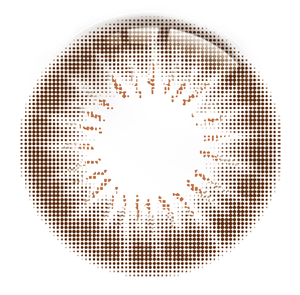
Cosmetic pigment placement on a toric lens surface adds surface micro-topography. If pigment particles are applied to the exterior curve, eyelid friction during rotational alignment causes mechanical irritation and optical instability. Modern tier-1 factories implement 3-Layer Sandwich Printing Technology:
The organic color pigments (Iron Oxides, Titanium Dioxide, Phthalocyanine Blue) are completely embedded between two protective hydrogel polymer layers. The pigment layer never directly contacts corneal epithelial tissue or the inner palpebral conjunctiva, preserving smooth fluid dynamics and meeting rigorous medical device safety protocols.
Custom OEM & ODM Engineering
From custom iris pattern design to specialized SPH/CYL/AXIS parameter combinations. We transform brand concepts into fully certified retail products with tailored packaging, vials, or blister formats.
Medical-Grade Quality Assurance
100% automated optical inspection (AOI) verifying lens power, cylinder accuracy, edge profile, and pigment containment. Full compliance documentation provided for global regulatory clearance.
Agile Production & Fast Dispatch
Maintain consistent inventory flow with 7-day dispatch on stock collections and predictable 20-day production cycles for customized private label orders. Low minimum order thresholds designed for brand scaling.
3. Future Procurement & Technological Trends (2025–2030)
As the international eye care industry advances, strategic procurement professionals must align with major technological shifts in soft contact lens manufacturing. Key macro trends shaping toric color lens manufacturing include:
1. Shift Toward High Dk/t Silicone Hydrogel (SiHy) Toric Matrices
Traditional hydrogel materials (such as HEMA) provide adequate water content but limited oxygen permeability (Dk/t around 15–25). Next-generation toric color lenses are rapidly transitioning to Silicone Hydrogel formulations boasting Dk/t values exceeding 80–110. This material allows higher oxygen flow to the cornea during extended wear, preventing hypoxia-induced corneal edema while maintaining pigment color vibrancy.
2. Hyper-Personalized Axis Fulfillment & Micro-Batch OEM
E-commerce direct-to-consumer (DTC) optical brands require flexible supply chains. Future-ready manufacturers are implementing automated precision lathe-cutting and custom mold systems capable of fulfilling small micro-batches of niche axis angles (such as 5° incremental steps) without inflating holding costs or minimum order quantities.
3. Sustainable Packaging & Regulatory Standardization
Global regulatory bodies (including the EU Medical Device Regulation MDR 2017/745 and US FDA Class II guidelines) are imposing stricter traceability requirements on cosmetic contact lenses. Procurement managers must verify that OEM suppliers offer full ISO 13485 quality management systems, complete chemical residual monomer analysis (via Gas Chromatography), and eco-friendly recyclable blister foils.
Partner with a Trusted Global Toric Lens Manufacturer
Scale your contact lens brand with industry-leading dynamic stabilization engineering, premium sandwich color technology, and flexible OEM manufacturing support.