Featured Low-MOQ & Private Label Product Range
Explore our high-demand inventory certified for global optical distribution, available for immediate sample evaluation and low-MOQ OEM custom packaging.
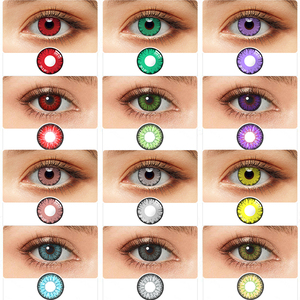
Hapipurecon Cosplay Sclera Contact Lenses Cosplay Contact Lens Bright Colored Contact Lensee OEM ODM
Send an Inquiry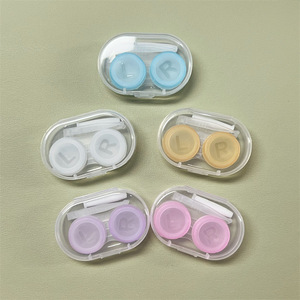
Low Price Plastic Contact Lens Case Packaging Eyewear Estuches Eye Glass Contact Lens Case
Send an Inquiry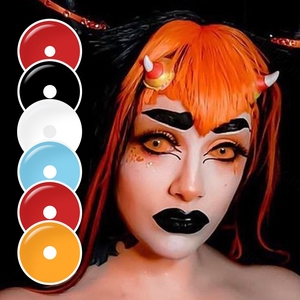
Psyeche 22mm Sclera Lenses Full Eye Contact Lenses Big Size Colored Contacts 1 Tone Black Contact Lenses Cosplay Anime Eye Lens
Send an Inquiry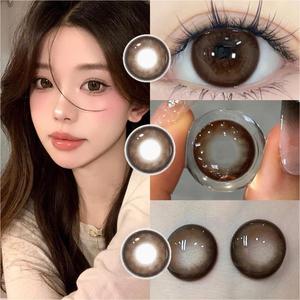
Haipurecon Natural 3 Tone Colored Contact Lenses 14.5mm Yearly Disposable Big Eye Soft Lenses OEM ODM Wholesale
Send an Inquiry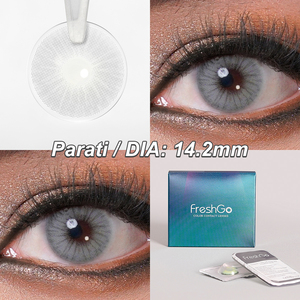
Free Shipping Freshgo Eye Lenses Color Natural Contact Lens RIO Wholesale Lentillas Custom Soft Yearly Colored Contacts for Eyes
Send an Inquiry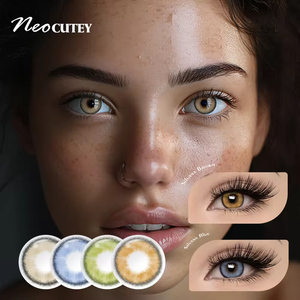
Silvana Neocutey Silicone Hydrogel Contact Lenses Prolong Wear Lenses Colored Eyes
Send an Inquiry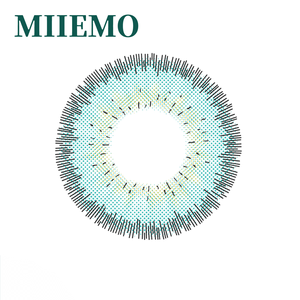
Long-Lasting Monthly Contact Lenses with Anti-UV Features for Outdoor Protection
Send an Inquiry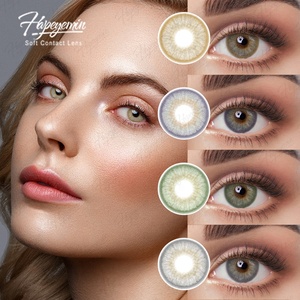
Haipurecon Taylor and Pola Series Yearly Color Contact Lenses Soft Hardness BeautyLens for Wholesale OEM ODM
Send an InquiryWhy Sourcing Directors Choose Our Manufacturing Infrastructure
Combining cleanroom automation, biocompatible material synthesis, and flexible low-MOQ contract manufacturing for high-converting cosmetic and prescription lens brands.
Sandwich Color Printing
Pigments are embedded between dual hydrogel layers via micro-encapsulation, preventing direct contact between colorants and ocular tissue for maximum biological safety.
High Dk/t Permeability
Engineered with next-generation Silicone Hydrogel and HEMA matrices, delivering elevated oxygen transmissibility to eliminate corneal hypoxia during extended wear.
Agile Low MOQ Program
Lower your upfront inventory liability. Scale your SKU matrix testing with custom private label branding starting from as few as 50 to 500 pairs per design.
1. Strategic Procurement Landscape: Navigating OEM Contact Lens Manufacturing
The global contact lens industry is undergoing a structural transition. Consumer demand for specialized visual experiences—ranging from subtle natural limbal-ring enhancement (14.0mm to 14.5mm) to theatrical special-effects (SFX) costume lenses and full-coverage 22mm sclera designs—has outpaced traditional off-the-shelf optical distribution channels. For B2B importers, brand owners, online retailers, and optometric chains, securing a reliable Custom OEM Low MOQ Contacts Factory is no longer just a supply chain option; it is a core competitive strategy.
Contact lenses are strictly regulated Class II or Class III medical devices depending on the jurisdiction (US FDA, EU MDR, China NMPA). Manufacturing soft contact lenses demands extreme manufacturing precision, absolute microbiological sterility, and consistent optical centered power curves. Contracting with a factory capable of supporting low Minimum Order Quantities (MOQ) empowers distributors to launch agile product lines, rapidly react to seasonal micro-trends, and optimize working capital without incurring burdensome stock-keeping risks.
Information Gain Insight: Modern OEM contact lens production leverages cast-molding technology integrated with automated optical inspection (AOI). This setup reduces edge variability to less than ±0.01mm, ensuring superior physiological fit on human corneas across diverse demographic base curves (8.5mm to 8.6mm standard).
2. Advanced Material Science: HEMA vs. Silicone Hydrogel Architectures
A fundamental decision when designing a custom contact lens line is selecting the polymer substrate. The two dominant material platforms in high-volume contact lens contract manufacturing are 2-Hydroxyethyl Methacrylate (HEMA) hydrogels and advanced Silicone Hydrogel formulations.
2.1 Poly-HEMA & Hydrogel Matrices
Poly-HEMA remains the industry gold standard for cosmetic color contact lenses. Its hydrophilicity allows water content ratios ranging from 38% to 55%. High water content offers immediate initial insertion comfort, making it an excellent medium for yearly disposable, monthly disposable, and cosmetic non-prescription (plano) lines. However, because oxygen transmission in pure hydrogel depends on water transport, managing dehydration rates in dry indoor environments is critical. Our proprietary monomer formulations incorporate cross-linked moisture-locking agents (such as Sodium Hyaluronate embedded into the lens matrix) to minimize lens dehydration during 8- to 12-hour daily wear cycles.
2.2 Next-Generation Silicone Hydrogel (SiHy)
For premium product lines, outdoor activity lenses, and extended-wear monthly products, Silicone Hydrogel represents the state of the art. By creating siloxane macromer pathways within the lens polymer, oxygen transmissibility (Dk/t) is increased from 15–25 (typical HEMA) up to 80–120 Dk/t. This dramatic increase allows oxygen to diffuse directly through the lens material regardless of water content. The result is significantly reduced limbal hyperemia (red eye), improved long-term corneal health, and enhanced end-user compliance.
| Technical Parameter | Standard HEMA Color Series | Silicone Hydrogel (SiHy) Series | 22mm Sclera SFX Series |
|---|---|---|---|
| Oxygen Permeability (Dk/t) | 20 – 28 Dk/t | 80 – 110 Dk/t | 18 – 25 Dk/t |
| Water Content (%) | 38% – 42% | 45% – 58% | 38% – 40% |
| Base Curve (BC) | 8.5mm – 8.6mm | 8.6mm – 8.8mm | 9.0mm (Custom Sclera Fit) |
| Diameter Range (DIA) | 14.0mm – 14.5mm | 14.2mm – 14.5mm | 17.0mm – 22.0mm |
| Color Imprinting Tech | Sandwich Bio-Encapsulation | Matrix Micro-Infiltration | Multi-Tone Hand-Layered FX |
| Replacement Cycle | Daily / Monthly / Yearly | Monthly / Quarterly | Occasional / Cosplay Wear |
| Regulatory Certifications | ISO 13485, CE 2195, FDA | ISO 13485, CE, FDA 510(k) | ISO 13485, CE Compliant |
3. Color Printing Technologies & Ocular Safety Protocols
The core challenge in cosmetic lens manufacturing is delivering vibrant color payoff—especially over naturally dark irises—without compromising biocompatibility or optical clarity. Traditional low-cost factories sometimes print ink directly onto the surface of the lens, exposing the delicate corneal epithelium to abrasive colorants and potential ink leaching.
3.1 Sandwich Encapsulation Technology
Our factory exclusively uses modern Sandwich Bio-Encapsulation Technology. In this multi-stage mold process, an initial clear protective layer of hydrogel polymer is gelled inside the female mold. The custom multi-tone dot pattern (such as 1-tone natural rim, 3-tone hazel-green transition, or intricate cosplay artwork) is printed onto this inner boundary using medical-grade organic pigments. Finally, a second layer of polymer is cast over the pigment layer, locking the colors inside a solid, smooth structure. The result is a smooth lens surface (Ra < 0.05 µm) that eliminates pigment-to-eye contact, mitigates bacterial adhesion, and provides day-long mechanical comfort.
3.2 Advanced Anti-UV & Blue Light Filtering Options
With increasing consumer awareness around solar UV radiation and digital eye strain, integrating functional light filters into cosmetic and vision correction lenses is a key growth area. By introducing UV-absorbing monomers (such as benzotriazole compounds) into the liquid polymer formulation during cast molding, our OEM lines achieve Class 2 UV blocking capability (blocking >95% of UVB and >70% of UVA rays). This value-add feature gives your private label brand a distinct advantage in retail marketing.
4. The Economics of Low-MOQ Sourcing for Brand Acceleration
Historically, establishing a private label contact lens brand required minimum order commitments of 10,000 pairs per color variant, creating high financial barriers to entry and causing unsold inventory accumulation. Our flexible supply chain model breaks this bottleneck by offering custom branding with low MOQs.
- Inventory Liability Reduction: Test market reception across 20 to 50 distinct color patterns with smaller batch runs rather than locking capital into single high-volume SKUs.
- Rapid Iteration & Trend Capture: Launch seasonal Halloween cosplay lines, festival series, or bridal collections in weeks rather than months.
- Custom Packaging Tailoring: From sterile polypropylene blister packs filled with buffered saline solution to glass vial packaging with customized outer paper boxes, foil stamp designs, and instruction inserts—our OEM services cover the complete retail-ready spectrum.
5. Global Industry Procurement & Future Development Trends (2025–2030)
Understanding where the cosmetic and therapeutic contact lens market is heading allows procurement executives to build future-proof product pipelines. Key strategic trends shaping the next 5 years include:
5.1 The Rise of Micro-Patterned Natural Iris Enhancers
While dramatic costume lenses (17mm mini-sclera and 22mm full-sclera) dominate niche cosplay and theatrical markets, daily-wear cosmetic purchasing is shifting toward ultra-natural iris patterns. End consumers are moving away from solid flat prints in favor of subtle radial limbal lines, soft gradient pupil rings, and multi-layered translucent tones that harmonize with dark brown eyes. Our R&D department releases quarterly color collections based on global beauty demographic data.
5.2 Sustainable Packaging & Eco-Friendly Materials
Regulatory authorities and consumer groups are increasing pressure on single-use plastics. Our production engineering teams are actively introducing bio-based recyclable blister foils, reduced-plastic primary blister trays, and FSC-certified biodegradable secondary packaging options to reduce environmental footprint without sacrificing product sterility or shelf-life stability (standard 5-year unopened shelf life).
5.3 Precision Prescription (Rx) Integration in Aesthetic Lines
Cosmetic lenses are no longer restricted to plano (0.00 diopter) wearers. Over 60% of color lens buyers require vision correction. Our automated power-grinding cast system allows seamless integration of spherical myopia corrections ranging from -0.50D to -10.00D across all primary color catalogs, giving your brand access to the high-value prescription user base.
6. Enterprise Quality Assurance & Regulatory Compliance Architecture
Compliance failure is the single greatest operational risk in international medical device trade. Stephies Lens maintains strict, documented quality management systems across every stage of the manufacturing lifecycle:
Cleanroom Manufacturing
Production takes place inside Class 100,000 (ISO Class 8) positive-pressure cleanrooms equipped with HEPA air filtration, continuous temperature/humidity monitoring, and touchless automated material handling.
Automated 100% AOI Inspection
Every single manufactured lens undergoes high-resolution Automated Optical Inspection (AOI) to screen for peripheral tears, edge burrs, center thickness anomalies, and micro-bubbles prior to primary sealing.
Terminal Autoclave Sterilization
Final sealed blister packs and glass vials undergo high-pressure steam sterilization at 121°C (250°F) for validated cycle times, ensuring a Sterility Assurance Level (SAL) of 10⁻⁶.
We provide comprehensive technical documentation dossiers to our B2B partners, including Certificate of Analysis (CoA) per batch, ISO 13485 quality system certificates, CE mark conformity documentation, and biocompatibility test reports (Cytotoxicity, Ocular Irritation, Systemic Toxicity testing) to facilitate smooth customs clearance and local health authority registration in your destination country.
B2B Sourcing & Manufacturing FAQ
Clear, direct answers to common operational, regulatory, and production questions from wholesale buyers and brand managers.
What is your standard minimum order quantity (MOQ) for custom private label orders?
We offer flexible OEM options designed to support both startups and scaling global brands. Stock catalog designs can be ordered in branded packaging starting from 50 to 100 pairs per color/power combination. For completely bespoke ODM pattern development and custom mold tooling, project MOQs typically range between 1,000 and 3,000 pairs depending on design complexity.
How long does the production process take from artwork approval to shipment?
For stock catalog color models requiring custom secondary packaging (box printing and labeling), lead time is typically 14 to 20 calendar days post artwork sign-off. Completely custom ODM formulations or new color pattern development generally require 30 to 45 days, including sample prototyping, physical testing, and high-speed batch production.
Are your colored contact lenses safe for dark brown or black eyes?
Yes. Our color designs use high-opacity multi-tone pigment technology formulated specifically to provide vivid coverage over dark brown irises without looking artificial. The opacity levels are engineered to balance light reflectivity while preserving natural iris depth.
What packaging formats do you offer for OEM/private label clients?
We offer single-lens polypropylene blister trays with peelable aluminum foil lids, as well as classic glass medical vials with flip-off aluminum seals. Secondary packaging solutions include custom printed paper boxes, plastic travel cases, multi-pack kits, and 10ml lubricating rewetting eye drop bottles for retail bundling.
What is the difference between 17mm mini-sclera and 22mm full-sclera FX lenses?
17mm mini-sclera lenses cover the iris and part of the surrounding white sclera, offering a dramatic enlargement effect while remaining easy to insert and comfortable for general costume wear. 22mm full-sclera lenses cover the entire visible eyeball surface, creating extreme theatrical or sci-fi visual effects for film, stage, and professional makeup. Both require careful handling and proper hygiene protocols.
What payment terms and shipping methods do you support?
We accept T/T (Bank Wire Transfer), PayPal, Credit Card, and Western Union. Orders are dispatched globally via express courier service (DHL, FedEx, UPS) with full tracking and medical shipment documentation, or via your designated international freight forwarder.
Ready to Build Your Custom Contact Lens Brand?
Consult directly with our technical product engineers and B2B sourcing specialists to receive custom OEM quotes, request free sample kits, or discuss your private label design ideas today.
Send an Inquiry