1. The Ocular Health Imperative: Why UV-Blocking Contact Lenses Are Redefining Global Eye Care
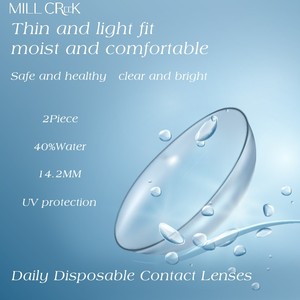
Sunlight exposes human eyes to solar radiation consisting of ultraviolet A (UVA: 315–400 nm) and ultraviolet B (UVB: 280–315 nm) rays. While sunglasses provide broad peripheral coverage, they frequently suffer from light leakage around the frame edges. UV-blocking contact lenses offer continuous, direct protection over the cornea, crystalline lens, and internal ocular structures, preventing long-term phototoxic damage such as photokeratitis, pterygium, cortical cataracts, and macular degeneration.
As a leading China-based OEM/ODM manufacturer, Stephies Lens integrates state-of-the-art polymer chemistry with precision cast-molding technology. This allows global brands to supply contact lenses that satisfy international optical safety metrics, including ANSI Z80.20, ISO 18369, and FDA Class 1/Class 2 UV absorption classifications.
| UV Protection Classification | UVA Transmittance (316–380 nm) | UVB Transmittance (280–315 nm) | Primary Clinical Benefit |
|---|---|---|---|
| FDA Class 1 UV Blocker | < 10% Transmittance (>90% Block) | < 1% Transmittance (>99% Block) | High-altitude, marine, snow, and extreme outdoor environments |
| FDA Class 2 UV Blocker | < 30% Transmittance (>70% Block) | < 5% Transmittance (>95% Block) | General daily urban wear and office blue-light filtering |
| Standard Contact Lenses | 80%–90% Transmittance | 30%–50% Transmittance | Minimal protection; susceptible to UV-induced ocular fatigue |
2. Technological Foundations: Polymer Engineering & Monomer-Infused Optics
Historically, early UV cut-off filters relied on post-production dip coatings that created optical distortion or degraded surface wettability. Stephies Lens pioneered reactive UV-monomer polymerization. By locking photoprotective molecules into the hydrophilic hydrogel network (such as 2-hydroxy-4-methacryloyloxybenzophenone), our contact lenses achieve zero leachability and maintain peak optical clarity across extended wearing cycles.
Key Engineering Advantages of Stephies Lens UV Monomer Technology:
- High Oxygen Permeability (Dk/t): Silicone hydrogel formulations deliver up to 125 Dk/t, preserving corneal oxygenation while filtering harmful solar radiation.
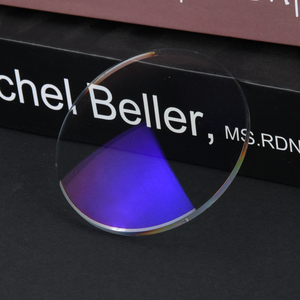
- UV420 & High-Energy Visible Light (HEVL) Cut-off: Beyond UV rays, our specialized MR-8 optical lenses and clear contacts block high-energy violet-blue light (380–420 nm), reducing digital eye strain from LED screens and bright sunlight.
- Biocompatible Moisture Lock Matrix: Incorporating hyaluronic acid (HA) and polyvinylpyrrolidone (PVP) into the lens matrix ensures high water content (38%–58%) and all-day comfort without causing dry-eye syndrome.
- Micro-Lathe & Wet-Cast Mold Precision: Ultra-thin edge design (0.06 mm center thickness) guarantees seamless eyelid movement and structural consistency across mass production runs.