Choosing Wholesale Contact Lens Cases and Kits involves more than comparing colors or unit prices. Buyers may encounter basic screw-top cases, flat travel cases, compact kits with mirrors, and bundles containing lens tools or solution bottles. Each format serves a different setting. Retail counters may favor simple, easy-to-display designs, while travel packs need secure lids and a small footprint. Small details matter. A cap that feels stiff or a case that leaks can frustrate users and weaken confidence in a product range. Material, compartment labels, print quality, and packaging deserve attention alongside cost.
This guide explores common case and kit types, then considers how wholesalers can compare them for retail, promotional, or professional supply needs. Practical questions include: Are the left and right compartments clearly marked? Can the case be cleaned and dried easily? Will the kit protect its contents during ordinary transport? These checks do not replace advice from an eye-care professional or care instructions for a particular lens and solution. Cases should be maintained and replaced according to manufacturer directions. There is no perfect kit for every buyer. A low price may suit bulk distribution, but poor usability can outweigh the savings. Careful sampling, clear product specifications, and reliable supplier communication support a more informed choice.
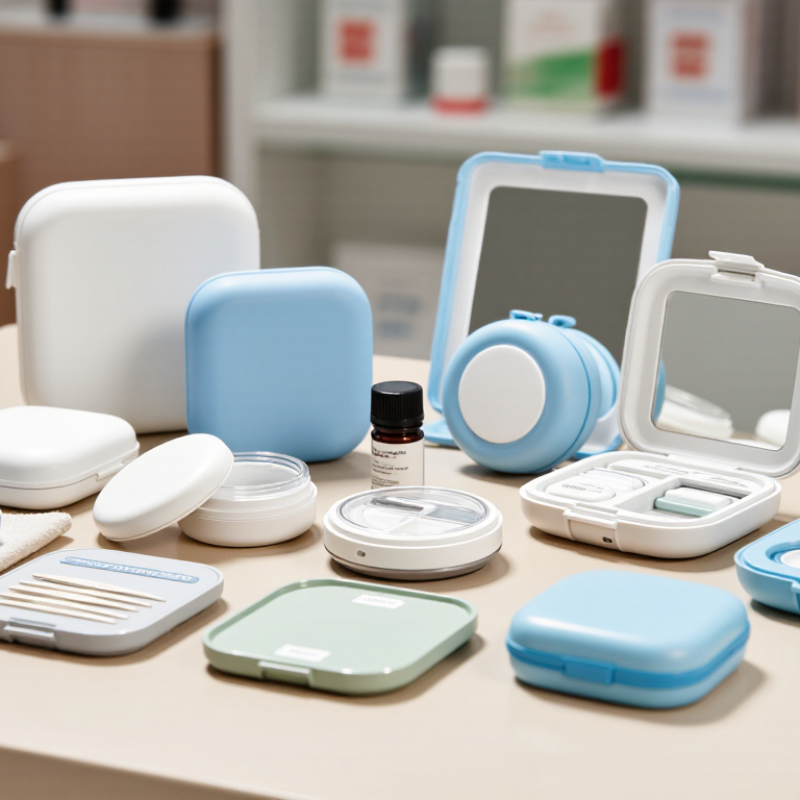
Basic Categories of Wholesale Contact Lens Cases and Kits
Wholesale contact lens cases and kits usually fall into a few practical categories. Basic storage cases have two labeled wells and screw-on caps, and are often sold in multipacks. Optical shops may prefer simple designs that are easy to sort and restock. Small details matter. A cap that closes unevenly can cause leaks, so buyers should inspect samples before ordering in bulk.
Travel kits add convenience. They may include a compact case, a small mirror, and storage space for accessories. Some kits use a hard outer shell to protect the contents inside a handbag or suitcase. Others are lightweight pouches with separate compartments. Check that compartments are easy to clean and that any included bottle suits the intended packaging needs. A kit can look tidy, yet feel awkward to use.
Wholesale buyers can also compare case materials, colors, labeling, and pack sizes. Clear labels help distinguish the left and right wells, while a textured cap may be easier to grip with wet hands. Not every customer needs a full kit; daily disposable lens users may prefer a compact case for occasional storage needs. Follow the lens-care instructions provided by the relevant eye-care professional. I would not assume the cheapest option is best: a sample test can reveal weak hinges or loose lids before they become a larger problem.
FAQS
Usually, no. A compact kit can still protect unopened lenses and hold a small mirror.
Choose separate, shallow wells with clear left and right marks. Wide openings help fingers reach the lenses.
Rigid lenses need secure compartments that limit movement. Scleral lens users may prefer larger wells and separate insertion tools.
Lightweight plastic suits high-volume orders. Smooth inner surfaces are easier to rinse, but still need complete drying.
Clear walls make residue easier to spot. Scratches can show quickly, though. That trade-off is easy to overlook.
Screw caps are familiar and replaceable, but threads may collect residue. Snap-fit lids open quickly, yet can loosen over time.
Test several samples, not just one. Check lid fit, dimensions, compartments, label space, and carton quantity.
Not necessarily. A mirror or separate compartment can help, but extra pieces may clutter the kit and complicate cleaning.
The article cites guidance to replace cases at least every three months. Easy replacement matters; oversized bundles may not help.
Conclusion
Wholesale Contact Lens Cases and Kits come in several practical categories, from simple storage cases to coordinated sets that include accessories for daily lens care. Case designs may vary according to the type of lenses they are intended to hold, with options suited to different shapes, storage needs, and routines. A typical kit may combine a case with useful items such as a mirror, applicator, or compact container, depending on its intended use.
Materials and construction influence durability, portability, and ease of cleaning. Buyers can compare plastic types, closure styles, leak-resistant features, size, and component selection when choosing products for their customers. Considering the intended audience, packaging needs, and preferred level of convenience can help wholesale buyers select cases and kits that balance function, quality, and value.