Press Esc to close
The global contact lens market is expanding, but larger lenses demand more careful evaluation. Fortune Business Insights’ Contact Lenses Market report estimates continued growth through 2032, driven by cosmetic, corrective, and specialty applications. That growth does not guarantee safe purchasing.
This guide examines seven 22mm Full Sclera Contact Lenses for international buyers. Each option should be assessed beyond color and visual impact. Key factors include diameter accuracy, material quality, oxygen transmission, moisture retention, prescription compatibility, and seller transparency. A lens covering most of the visible eye can feel different from a standard soft lens. Small fitting errors may cause redness, dryness, blurred vision, or discomfort.
The U.S. Food and Drug Administration classifies contact lenses as medical devices, including decorative lenses. The agency advises consumers to obtain professional fitting and a valid prescription. The U.S. Centers for Disease Control and Prevention also reports that more than 45 million Americans wear contact lenses, highlighting the importance of consistent hygiene and follow-up care. These sources support a practical buying principle: appearance comes after eye health.
Our comparison considers product specifications, user experience, manufacturing clarity, and international ordering risks. Buyers should verify packaging, replacement schedules, cleaning instructions, and return policies. Some marketplace descriptions remain incomplete. That matters.
A 22mm design may suit one eye but fail another. Therefore, this overview is informative, not a substitute for an eye-care professional’s assessment. Select reputable suppliers, avoid unverified products, and stop wearing lenses when pain or vision changes appear.
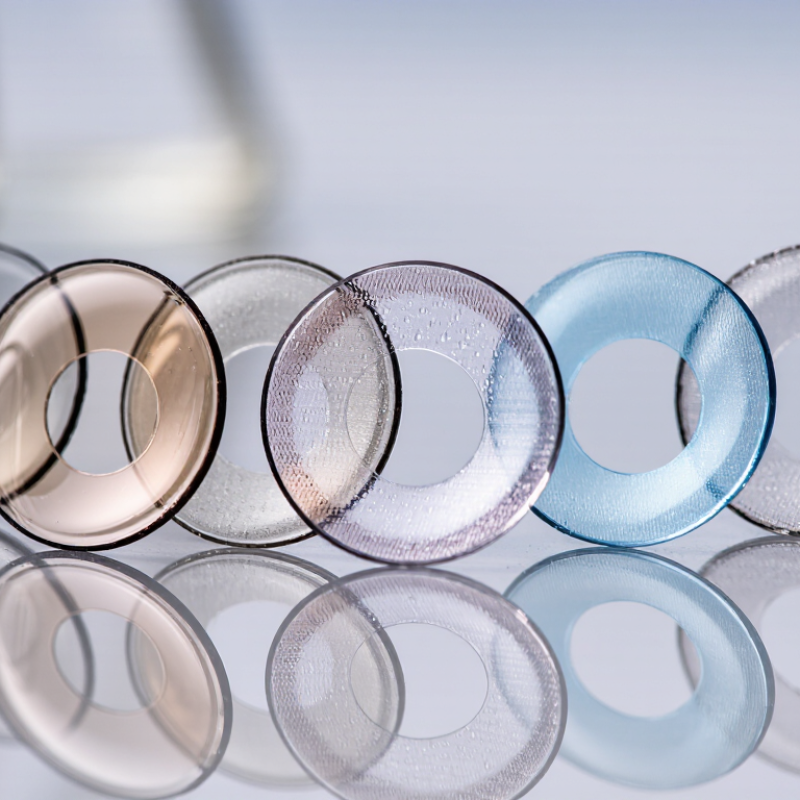
A 22 mm full-sclera contact lens is measured across its widest diameter. It usually extends beyond the cornea and covers much of the visible sclera. However, diameter alone does not define comfort or visual stability. Eye shape, scleral contour, and lens geometry also matter.
Coverage should remain broad without pressing heavily against the conjunctiva. The lens edge needs a smooth landing zone. Excessive pressure may leave red marks, while loose edges can allow debris and unstable vision. A healthy fit should provide adequate corneal clearance and maintain a balanced tear reservoir. It should move slightly during blinking, but it should not rock or dislodge easily. Small differences matter.
A common mistake is assuming every 22 mm lens fits similarly. It does not. Measurements can vary between manufacturers and fitting systems. An eye-care professional should assess corneal vault, limbal clearance, haptic alignment, and wearing time. Buyers should also confirm material safety, prescription accuracy, cleaning instructions, and local dispensing requirements. Full-sclera lenses are not automatically safer because they cover more tissue. That assumption deserves caution. A lens may look impressive in a product photo yet feel uncomfortable after two hours. Professional fitting remains the most reliable standard for global buyers.
A 22 mm full sclera lens can look stable while still creating uneven pressure. Diameter alone does not determine performance. Base curve, sagittal depth, and oxygen delivery must work together.
Base curve mainly describes the central optical zone, but scleral fitting depends more on total sagittal depth. A flatter cornea, deeper limbus, or prominent nasal sclera can change the required vault. Clinical reviews commonly target about 200–300 microns of central clearance after settling, although this is not universal. A lens that starts with 400 microns may settle significantly during a long wearing day. That detail is easy to underestimate.
Sagittal depth controls corneal clearance and landing-zone alignment. Excessive depth can increase fluid thickness and reduce oxygen availability. Michaud et al. reported that scleral lens designs may require Dk/t near 125 barrer/cm to limit hypoxic stress, based on theoretical modeling published in Optometry and Vision Science. The TFOS DEWS II report also emphasizes oxygen supply, tear-film stability, and surface health during lens wear. Dk/t is not a magic number, though. A thicker reservoir, tight haptics, or trapped bubbles can reduce real-world performance. Fluorescein evaluation, OCT measurements, and end-of-day inspection remain essential. A perfect fitting chart can still miss an uncomfortable eye.
7 Best 22mm Full Sclera Contact Lenses for Global Buyers
Seven 22 mm lens types differ sharply in material, design, comfort, and opacity. Hydrogel lenses feel soft but may provide lower oxygen flow. Silicone hydrogel options usually support better oxygen transmission. Rigid gas-permeable designs offer sharper surface stability, yet they can feel noticeable. Hybrid lenses balance a rigid center with a softer skirt. Printed iris lenses create realistic color transitions. Hand-painted opaque lenses deliver stronger coverage. Prosthetic-style designs can mask major color differences but often require custom fitting.
Comfort depends on more than softness. A 22 mm lens touches a wide scleral area, so edge pressure matters. The U.S. Centers for Disease Control and Prevention estimates that about 45 million Americans wear contact lenses. However, specialty scleral wearers represent a much smaller group. The TFOS DEWS II report links contact lens use with ocular surface discomfort, especially when tear stability is poor. Opacity also changes vision. Solid black or white patterns can reduce natural light and depth perception. Transparent gradients look subtler. The ranking is not absolute.
Tips: Ask a licensed eye-care professional to measure diameter, vault, and oxygen needs. FDA guidance classifies decorative lenses as medical devices requiring professional fitting in the United States. Never share lenses, sleep in them, or use tap water. Replace damaged designs immediately. My practical mistake was judging comfort after ten minutes; longer wear revealed edge awareness. That detail deserves more attention in every buying guide.
For 22mm full sclera contact lenses, oxygen transmission deserves careful attention. A large lens covers more conjunctival tissue and creates a fluid reservoir over the eye. High Dk/t material can improve oxygen movement, but it cannot remove all risk. A licensed eye-care professional should assess lens clearance, movement, corneal health, and tear quality before fitting.
Wear time should increase slowly. Many users begin with a few hours, not a full day. Never sleep in these lenses unless specifically directed by an eye specialist. Remove them immediately if vision becomes hazy, the eye feels unusually dry, or redness persists.
My concern is simple: comfort can hide early problems. Discomfort is not always a reliable safety signal.
Hygiene needs consistent habits. Wash and dry hands before touching the lenses. Use sterile, preservative-free saline approved for scleral lens filling. Tap water, saliva, and homemade solutions should never contact the lens or eye. Replace the case regularly, and follow the prescribed replacement schedule.
Follow-up data may include visual acuity, corneal staining, redness, tear-film changes, and signs of swelling. Online measurements are not enough for a 22mm fit. Local medical-device rules and professional guidance may differ between countries. Some recommendations also remain uncertain, so buyers should question confident claims unsupported by clinical data.
For global buyers, 22mm full sclera contact lenses require more than an attractive design. A valid prescription and professional fitting should guide every order. Requirements differ by country, and some regions classify these lenses as medical devices. Fit comes first. An eye-care professional should check corneal health, tear movement, diameter, and wearing time before purchase.
Look for documented quality controls and relevant ISO-based manufacturing procedures. ISO references can indicate controlled production, but they do not automatically prove local approval or safe fitting. Ask the seller for material details, prescription limits, care instructions, and batch traceability. A reliable supplier should answer clearly, not pressure you. Poorly fitted lenses may cause redness, blurred vision, dryness, or corneal injury.
Shipping needs careful planning. Confirm whether customs documents, prescription copies, or import permits are required in your destination country. Use protective packaging and tracking, especially for international delivery. Delivery delays happen. Keep spare time before travel or an event. Support should explain cleaning, storage, replacement schedules, and return conditions before payment. Ask before ordering. A return may not be possible after opening sterile packaging. Even experienced buyers can overlook measurements, and online photos rarely show the true fit. When information feels incomplete, pause and request professional advice.
It refers to the lens’s widest diameter. The lens usually extends beyond the cornea and covers much of the visible sclera.
No. Fit varies. Eye shape, scleral contour, and lens geometry can differ significantly. A professional should assess vault, limbal clearance, and haptic alignment.
The edge should land smoothly without pressing heavily on the conjunctiva. The lens should move slightly during blinking. It should not rock or dislodge easily. Red marks may indicate excessive edge pressure.
Yes. A loose edge may allow debris underneath. It can also create unstable vision and irritation. Small differences matter.
Begin with a few hours, not a full day. Increase wearing time slowly and follow professional instructions. Never sleep in the lens unless an eye specialist specifically permits it.
Remove it if vision becomes hazy, dryness feels unusual, or redness persists. Do not rely only on comfort. Early problems can sometimes feel mild.
Wash and dry your hands before handling it. Use sterile, preservative-free saline approved for scleral lens filling. Never use tap water, saliva, or homemade solutions. Replace the storage case regularly.
No. Online measurements are not enough. An eye-care professional should check corneal health, tear quality, movement, and clearance. Follow-up may include visual acuity, redness, staining, and swelling checks. I would question confident claims without clinical data.
This guide to 22mm Full Sclera Contact Lenses explains how large-diameter lenses extend beyond the cornea to provide broad coverage, while emphasizing the importance of proper scleral fit. It examines how diameter, base curve, sagittal depth, and oxygen permeability influence comfort, stability, vision, and eye health. Readers will compare seven lens types by material, optical design, opacity, surface finish, and expected wearing experience, helping them understand which features may suit different cosmetic or visual preferences.
Safety is a central focus, including oxygen transmission, recommended wear limits, cleaning routines, replacement schedules, and the need for professional eye-care evaluation. The global buying section discusses prescription requirements, ISO-related quality considerations, shipping expectations, sizing support, after-sales communication, and regional regulations. Because full-sclera lenses require precise fitting, buyers should obtain guidance from a qualified eye-care professional and select products supported by clear documentation, responsible hygiene instructions, and reliable customer service.